Themify offers a powerful drag-and-drop builder and a wide range of pre-designed layouts, making it great for users who want design flexibility without touching code. It’s especially useful if you want to build visually complex pages quickly.
Blocksy, on the other hand, is a lightweight and modern theme built for speed and compatibility with the Gutenberg editor. It’s highly customizable, beginner-friendly, and works seamlessly with popular page builders like Elementor or Brizy.
Both are excellent choices—Themify is ideal if you prefer a visual builder experience, while Blocksy is great for a clean, fast, and intuitive WordPress setup.
When building your own website, it’s easy to focus on the design, content, and functionality—while overlooking one of the most critical decisions: choosing the right web hosting. Hosting isn’t just about storing your site online; it’s the foundation that affects loading speed, security, reliability, and even SEO rankings. In this post, I’ll share my experience with one of the most popular hosting providers out there – Hostinger. Why did I choose it, how easy was it to get started, and would I recommend it to others? Let’s dive in.
Setting Up WordPress on Hostinger: Easier Than You Think
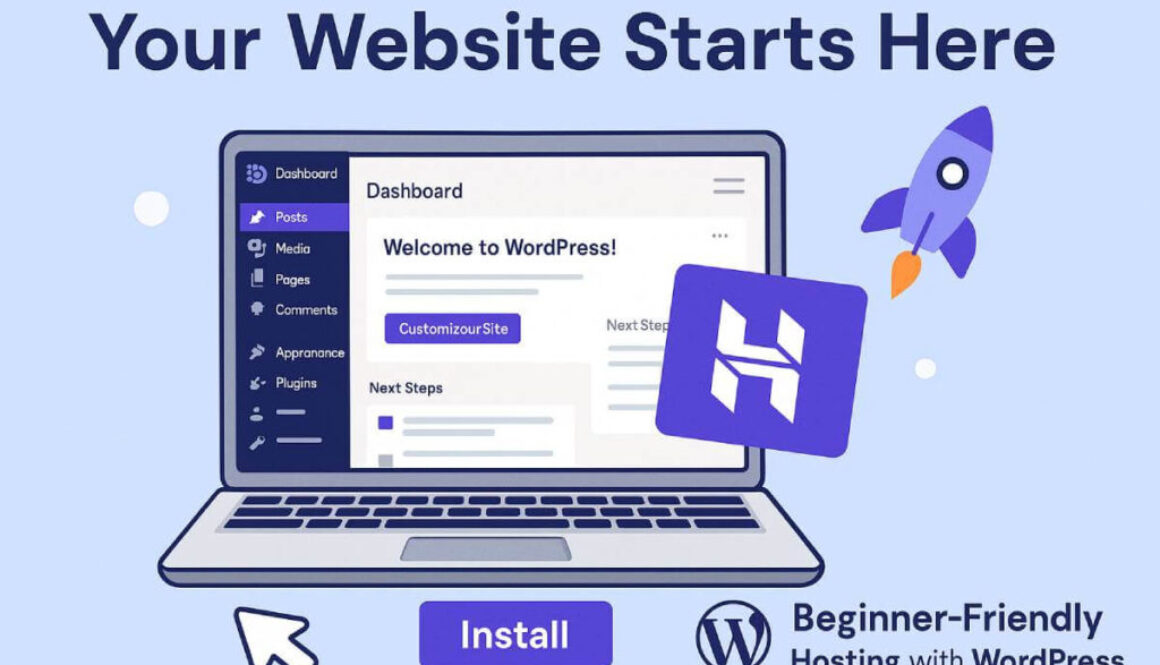
Once you’ve signed up with Hostinger and chosen your hosting plan, the next step – installing WordPress – is surprisingly straightforward. Hostinger provides a one-click WordPress installer directly in their intuitive control panel (hPanel). Here’s how it works:
Log in to your Hostinger account. After purchasing your hosting plan, you’ll be taken to the dashboard where everything is neatly laid out.
Choose the “Auto Installer.” In the hPanel, find the “Website” section and click on Auto Installer. Select WordPress from the list of options.
Fill in basic details. Enter your desired admin username, password, and site name. You can also choose the domain where WordPress should be installed (if you already registered one through Hostinger or connected an external domain).
Click “Install.” That’s it. Hostinger takes care of the rest—setting up your WordPress site in the background. Within minutes, your site is live and ready for customization.
Initial Setup: What to Do After Installation
After installation, Hostinger gives you quick access to your WordPress dashboard. From here, you can:
Choose a theme – Use one of the free pre-installed themes or browse thousands of options in the WordPress theme library. I’m using the Themify theme. Another very popular option is Blocksy, which is beginner-friendly and easy to install and customize to your needs. More about themes and a detailed comparison will follow in the next post.
Install essential plugins – For SEO, security, backups, and performance (many guides and presets are offered directly in Hostinger).
Set up basic pages – Like “Home,” “About,” “Contact,” etc.
Customize your site – Change colors, fonts, and layouts with the built-in WordPress customizer or block editor.
Thanks to Hostinger’s optimized WordPress environment and beginner-friendly tools, the entire process—from signup to a working website—can take less than 30 minutes, even if you’ve never built a website before.
Choosing the right web hosting provider is essential for building a fast, reliable, and secure online presence. Among the many options available today, Hostinger stands out for its affordability—offering quality hosting for less than $200 over four years—along with user-friendly tools and strong performance. Whether you’re launching a personal blog, business website, or online store, Hostinger provides a powerful and budget-friendly hosting solution tailored to your needs.
Why the Business Plan Might Be the Smartest Choice
If you’re serious about performance and scalability, the Business plan is hands-down the best option. Compared to the cheaper tier, it gives you:
Blazing-fast NVMe storage
Up to 50 GB of space
Support for up to 50 websites
Higher monthly traffic limits
Plus all the essentials like free SSL, email, and more
For long-term savings, this plan really shines. A 4-year subscription—including free domain registration—costs less than $200 in total. And with the extra discount (as shown below), you might pay as little as $153 for the entire 4 years. That’s less than $4 a month for premium hosting.
And if it’s not for you? No worries. Hostinger offers a 30-day money-back guarantee, so you can try it risk-free.
💡 Ready to launch your site with high-speed hosting?
John had always dreamed of having his own website—a place to showcase his work and ideas. But every time he looked into it, the cost of hiring a designer or developer stopped him cold. It felt like a dream meant only for big budgets and tech experts. That is, until one evening, when he stumbled upon WordPress while searching for alternatives. Even better, he discovered Themify—a powerful, easy-to-use theme that made building his site feel almost effortless. Suddenly, what once seemed impossible was not only doable but fun. His dream site? Finally, a reality – without breaking the bank.
That “John” was actually me a few years ago. Within an already existing business, there was a desire to expand into online sales. But the question was—how, when building an online store, did it seem so expensive and complicated?
But is it? Not even close. With just a bit of computer know-how, just about anyone these days can create a website—whether it’s a blog, a business page, or even a full online store.
And that’s how it all began.
Let’s break it down step by step. What do you need to build a functional website?
Hosting and a domain – the first steps toward your website
WordPress – a powerful and user-friendly website platform
Themify – for beautiful, customizable design themes
Optimization tools – to help your site rank better on search engines
Website hosting and a domain
When you decide to create your own website, the first important steps are choosing a domain name and web hosting. A domain is the address of your website (e.g., www.mywebsite.com) that users type into their browser to find you online. It’s important to choose wisely – your domain should be short, memorable, and relevant to your content.
Web hosting, on the other hand, is the service where all your website’s files and data are physically stored. Essentially, it’s the rental of space on a server that keeps your site online and accessible 24/7. There are different types of hosting (shared, VPS, dedicated), and the right choice depends on your website’s needs and scale.
By registering a domain and selecting the right hosting service, you lay the foundation for building your online presence. Think of your domain as your home address, and the hosting as the house itself—where your website “lives.”
When choosing a hosting provider, it’s important to find one that offers a good balance of price, performance, and support. Hostinger is a popular choice for beginners and small businesses because it offers affordable plans, fast server response times, and an easy-to-use control panel (hPanel).
Users also appreciate the extras that come with some plans—like a free domain, SSL certificate, daily backups, and 24/7 customer support. Additionally, Hostinger allows for quick installation of popular platforms like WordPress, making it ideal for those who want to build a website without coding knowledge.
Thanks to its combination of affordability, speed, and reliability, Hostinger is an excellent starting point for anyone beginning their online journey.
WordPress
Why Choose WordPress for Your Website?
WordPress: Power at Your Fingertips WordPress has become one of the most popular platforms for building websites – and for good reason. From bloggers and artists to companies and global brands, people across the world trust WordPress to power their online presence. Why? Because it offers full control, incredible flexibility, and ease of use – even if you don’t know how to code.
1. Free and Open Source WordPress is completely free and open source, which means you have full access to the code and can tailor your site exactly the way you want.
2. Easy Content Management With a modern block editor and a drag-and-drop interface, you can publish articles, add images or videos, and update your content without any tech skills.
3. Thousands of Themes and Plugins You’ll find a huge selection of both free and premium themes and plugins—letting you build anything from a sleek blog to an e-commerce store, portfolio, or company site.
4. Mobile-Ready and SEO Friendly WordPress ensures your website looks great on mobile devices and is optimized for search engines—two essential ingredients for online success.
A more in-depth look at WordPress will follow in one of the upcoming posts, where I will examine its features in detail and explain why it remains the most widely used platform for website development.
Getting Started with Themify: An Easy Tool for Building Your WordPress Website
If you’re new to WordPress and looking for an easy way to design your website, Themify is a great place to start. It offers beautiful themes and a user-friendly page builder that lets you create your own website—without writing any code.
The heart of Themify is its drag-and-drop builder. This means you can just pick an element (like text, image, or button), drag it onto the page, and move it around however you like. You can see your changes live as you make them, so there’s no guessing what your website will look like.
Themify also comes with ready-made layouts and templates. You can choose a design you like and customize it with your own colors, fonts, and content. Everything is mobile-friendly too, so your site will look great on phones and tablets.
Boost Your Website’s Visibility: Must-Have SEO Tools for WordPress
If you want your website to show up higher in Google search results, Search Engine Optimization (SEO) is essential. Fortunately, there are several powerful tools that make optimizing your WordPress site easy—even if you’re just starting out.
1. Yoast SEO – One of the most popular plugins, Yoast helps you optimize your pages and posts with easy-to-follow tips on keywords, meta descriptions, internal links, and readability.
2. All in One SEO (AIOSEO) – A great alternative to Yoast, AIOSEO offers tools for beginners and pros alike, with features like sitemap creation, social media integration, and on-page analysis.
3. Rank Math – Fast-growing in popularity, Rank Math offers an intuitive setup wizard and advanced features like rich snippets and keyword tracking—all in a lightweight package.
4. Google Search Console – While not a plugin, this free tool from Google lets you track how your site performs in search, spot errors, and see what keywords bring users to your pages.
5. Site Kit by Google plugin offers a simple, one-click setup that seamlessly connects your WordPress site to key Google tools like Analytics, Search Console, and AdSense – all without touching any code.
Start with one SEO plugin plus Site Kit by Google and gradually learn the basics – these tools will guide you every step of the way!
Building your own website may seem overwhelming at first, but with the right tools such as WordPress, Themify, and a reliable host like Hostinger, it’s more accessible than ever. Start small, stay curious, and don’t be afraid to learn as you go. Your online presence is just a few clicks away.